
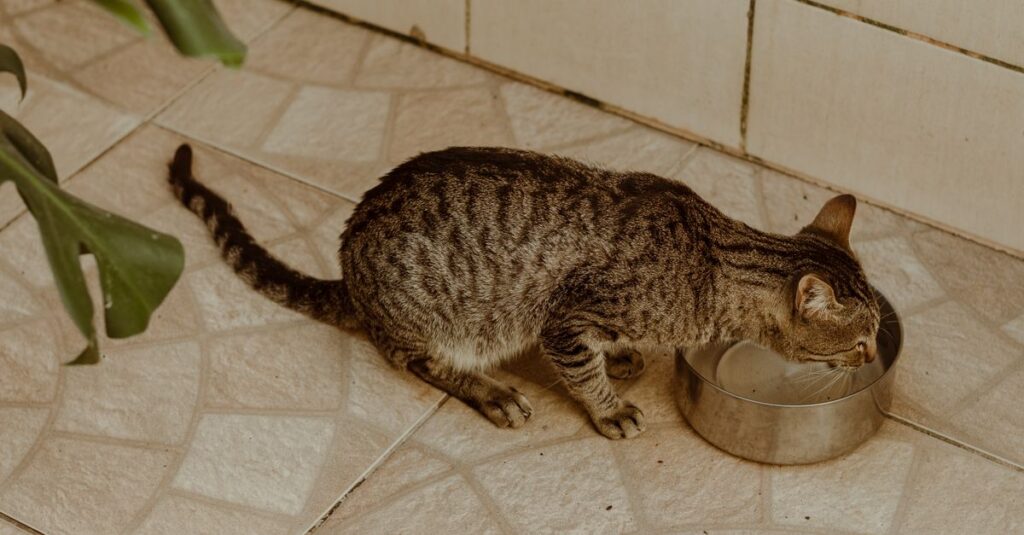
Barely ever catch your cat drinking? You are not imagining it, and your cat is not being lazy. Cats came from desert animals and have a low thirst drive built in, so they pull most of their water from food. Dry kibble is only about 10% water, so the math never adds up. Over time that slow dehydration wears on the kidneys, which is the biggest health problem older cats face. The fix is easier than you would think.
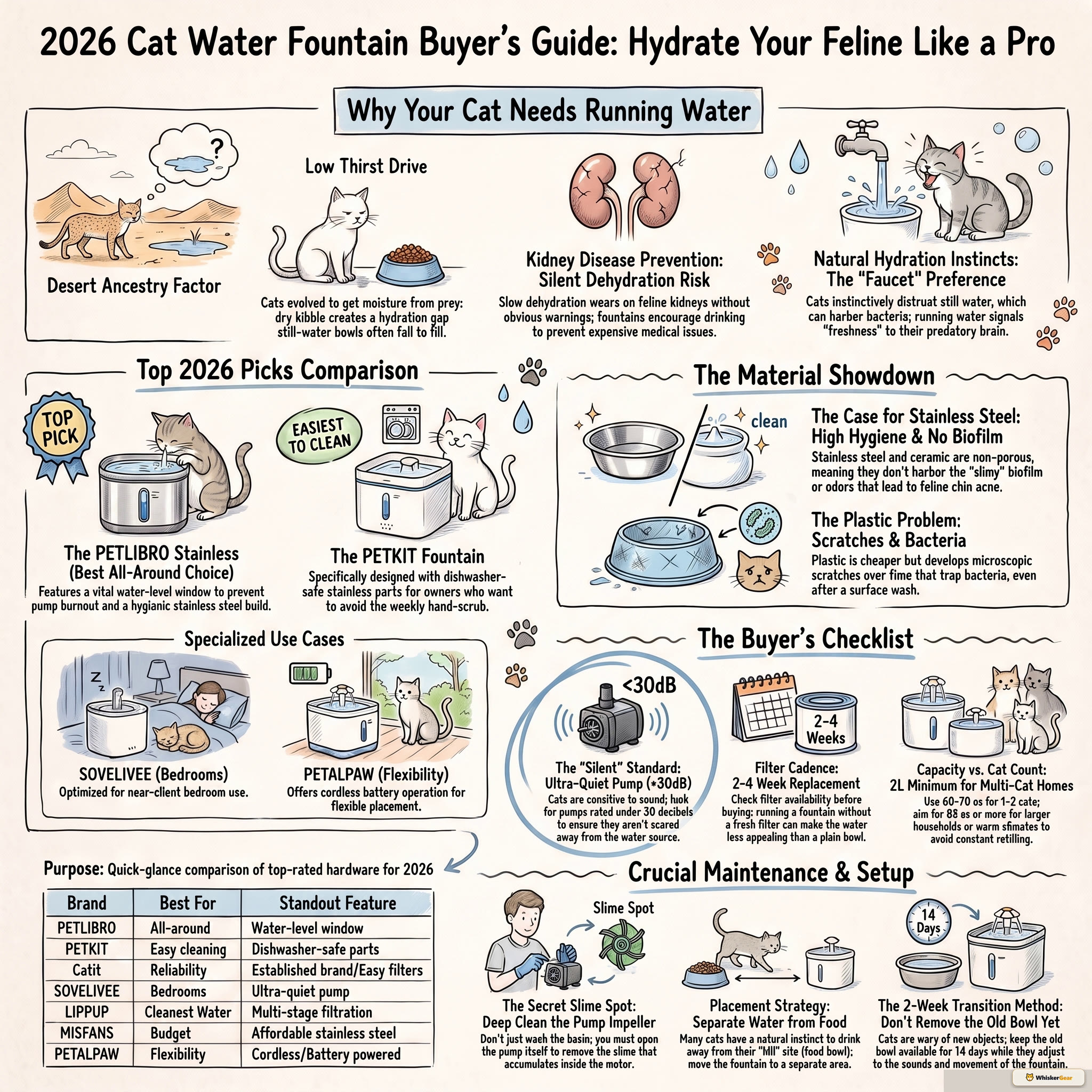
Why cats drink so little
In the wild a cat gets its water from prey, which is roughly 70% water. So it never needed the habit of drinking much from a bowl. Swap that prey for dry food and your cat quietly runs a water deficit without ever acting thirsty.
Daily Cat Hydration Calculator & Fountain Matcher
Based on feline veterinary guidelines (~50 ml of water per kg of body weight daily). Enter your cat's weight and habits to see their exact fountain target:
Signs your cat is dehydrated
- Skin that is slow to snap back when you gently lift the scruff
- Dry or sticky gums
- Low energy and less pee in the litter box
- Dark, strong-smelling urine
7 ways to get your cat to drink more
1. Add a water fountain. This is the one that moves the needle, because cats prefer moving water. See our picks for the 7 best cat water fountains.
2. Put water in a few spots around the house, away from the litter box.
3. Keep water away from food. To a cat, water next to food reads as contaminated.
4. Use a wide, shallow bowl so the whiskers do not brush the sides. Whisker fatigue is a real thing.
5. Add wet food (pouches or pâté). It bumps up total water intake a lot.
6. Refresh the water daily. Cats turn their noses up at stale water.
7. Try cold water or an ice cube on hot days.
PETLIBRO Stainless Steel Cat Fountain
Quiet, hygienic stainless with a water-level window. Our overall pick.
Why this matters more as your cat gets older
Chronic mild dehydration does not announce itself the way a stomach bug does. It builds slowly, in the background, for years. The kidneys are constantly filtering the blood and concentrating urine, and when there is never quite enough water flowing through, that tissue works harder than it should. Over a cat’s lifetime, that extra strain is one of the reasons chronic kidney disease is so common in older cats. It is not the only cause, but it is a real, avoidable piece of the puzzle.
This is also why vets tend to ask about water intake at every senior wellness visit, not just when something is already wrong. A cat that has been well hydrated for years is simply starting from a better place if kidney function does begin to decline with age. And the opposite is worth knowing too: a sudden increase in thirst and urination is not a “good, they’re finally drinking” sign. It can point to conditions like diabetes, hyperthyroidism, or kidney disease itself, so a noticeable change in either direction, drinking a lot more or a lot less than usual, is worth mentioning to your vet.
Common mistakes that quietly undo your efforts
Most owners who try to improve hydration make at least one of these without realizing it.
- Assuming every cat wants moving water. Most do, but not all. Some cats genuinely prefer still water in a familiar bowl. If a fountain gets ignored after a fair trial, do not force it, offer both and let your cat vote with its habits.
- Letting the bowl or fountain basin get slimy. That film is bacterial biofilm, and cats notice it before you do. A bowl that looks clean to you can already taste off to a cat’s much more sensitive nose and palate.
- Moving the water bowl too often. Cats build routines around where resources are. Constantly relocating the bowl to “test spots” can backfire; pick a few good, consistent locations and stick with them.
- Only ever using tap water in a plastic bowl. Plastic can hold onto odors and scratches over time, and some cats react to the smell of chlorinated tap water. Switching to a wide ceramic or stainless bowl, or filtered water, solves this for a lot of picky drinkers.
- Giving up after a few days. New habits, including drinking habits, can take a couple of weeks to stick. Keep the fresh water available and consistent even if the first week does not show an obvious change.
FAQ
How much water does a cat need per day?
About 4 ounces per 5 lbs of body weight, counting both water and moisture from food.
Do fountains really help?
They do. Most owners see more drinking within days. We break down the difference in our fountain vs bowl comparison.
My cat suddenly seems much thirstier than usual. Is that a good thing?
Not necessarily. A real jump in thirst and urination, rather than the gradual improvement you would expect from adding a fountain or wet food, can be a sign of an underlying condition like kidney disease, diabetes, or hyperthyroidism. If the change is sudden or paired with weight loss, it is worth a vet visit rather than assuming it is just better hydration habits.
Next step: pick a model in our best fountains list, and keep it running with our filter guide.
Get the Cat Parent Safety & Gear Checklist (Free)
Join 1,000+ cat parents: get instant access to our 1-page Home Safety, Litter Ratio & Emergency Vet Checklist — plus one short email when we publish a new guide.